Erawan Museum: Three‑Headed Elephant
Just south of Bangkok, in Samut Prakan, stands one of Thailand’s most striking buildings: a giant three‑headed bronze elephant housing a museum of art, antiques, and spiritual symbolism. The Erawan Museum is more than a photo spot; it’s a carefully designed journey through Thai cosmology, with three levels representing the Underworld, Earth, and Heaven.
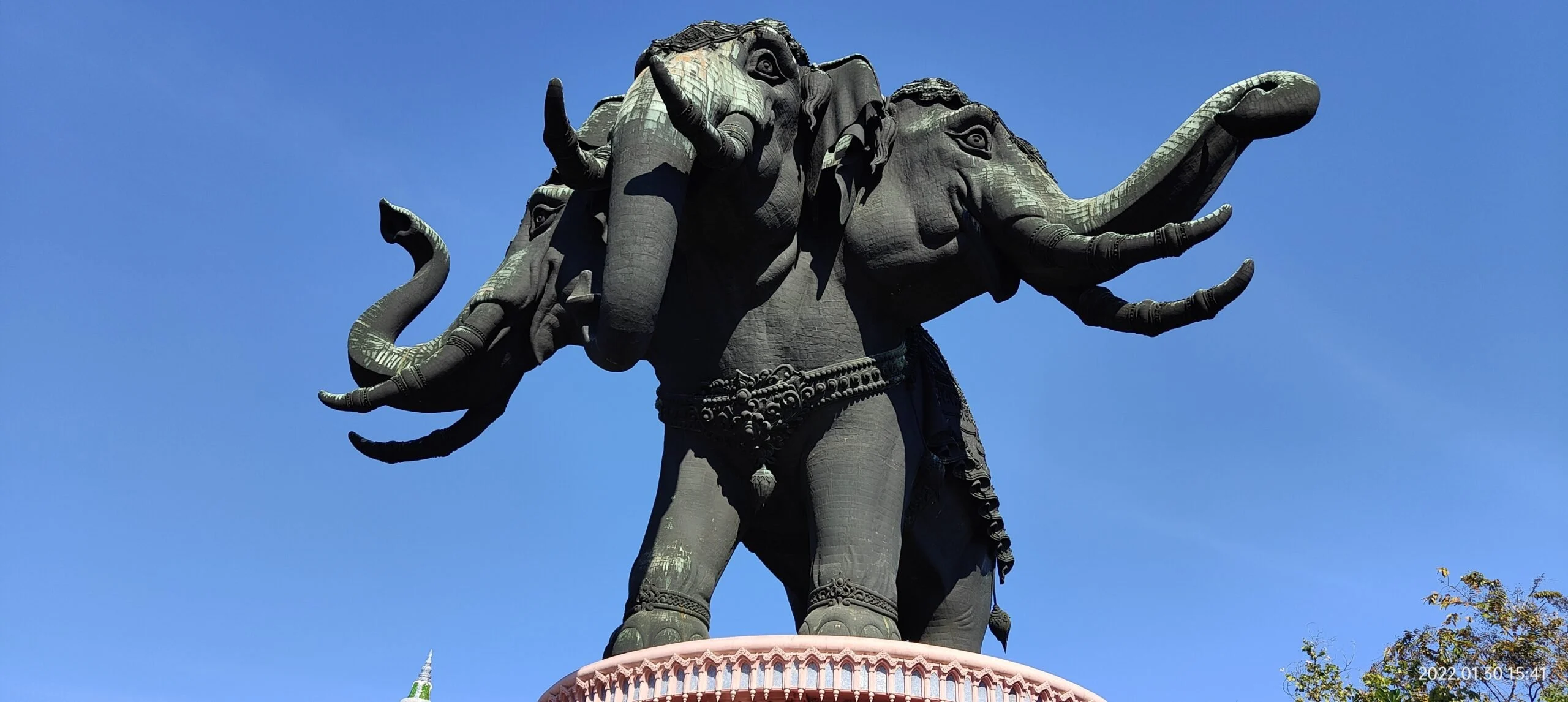
This guide covers everything you need to plan your visit: what to see inside, ticket prices, opening hours, how to get there by BTS/taxi, dress code, and tips to make the most of your trip.
What Is the Erawan Museum?
The Erawan Museum is a private art museum built around a 29‑meter‑tall, three‑headed elephant sculpture (named after Erawan, the mythical elephant of Hindu‑Buddhist cosmology). Inside the elephant and its pedestal are three main floors, each representing a different realm of existence in traditional Thai belief:
The Underworld (ground floor) – a dimly lit space with antique statues, ceramics, and artifacts.
The Human World / Earth (middle floor) – a circular hall with Thai murals, lacquer panels, and decorative art.
The Heavens / Celestial Realm (top floor, inside the elephant’s body) – a breathtaking stained‑glass dome with celestial imagery and sacred Buddha images.
The museum was created by businessman and art collector Khun Lek Viriyapant, who also founded the nearby Ancient City (Muang Boran) open‑air heritage park. His vision was to display his personal collection in a space that reflects Thai spiritual and cultural identity, not just as objects in glass cases.
Why Visit the Erawan Museum?
Reasons it’s worth adding to your Bangkok or Samut Prakan itinerary:
Unique architecture: The three‑headed elephant is iconic and instantly recognizable.
Art + spirituality: A blend of antiques, religious art, and Thai cosmology in one immersive experience.
Easy to reach: Accessible via BTS Skytrain plus a short taxi or walk.
Great for photos: From the exterior sculpture to the stained‑glass dome and intricate interiors.
Combines well with Ancient City (Muang Boran): Perfect for a Samut Prakan day trip.
What to See Inside the Erawan Museum
The museum is designed as a vertical journey from the Underworld up to the Heavens. You typically start at the bottom and move upward.
1. The Underworld (Ground Floor)
Softly lit galleries with antique statues, ceramics, and ritual objects.
Displays include:
Chinese vases from the Ming and Qing dynasties.
Buddhist and Hindu figurines, including a thousand‑armed Guanyin (Chinese goddess of compassion).
Mythical Naga serpents and other guardian figures.nomadotravel+1
Information panels explain the symbolism of the Underworld in Thai cosmology and the museum’s construction.
This level feels more like a traditional museum, with display cases and labels.
2. The Human World / Earth (Middle Floor)
A circular hall representing the human realm.
Walls covered with:
Thai mural paintings depicting scenes from literature and mythology.
Lacquered panels and decorative art in traditional styles.
Intricate stucco work, colored porcelain inlays, and ornate supporting pillars.
European ceramics and other international artifacts are also displayed, showing the collector’s global interests.
This floor bridges the earthly and the divine, with rich decoration and a sense of moving upward.
3. The Heavens / Celestial Realm (Top Floor)
Located inside the elephant’s body, this is the museum’s highlight.
A stunning stained‑glass dome painted with celestial imagery: the solar system, zodiac signs, and Buddhist cosmology.
Sacred Buddha images from different periods and regions are placed around the space.
Light filtering through the colored glass creates a serene, almost otherworldly atmosphere.
Many visitors consider this floor the most memorable part of the museum, both visually and spiritually.
4. Gardens & Exterior
The museum sits within landscaped gardens with ponds, sculptures, and shaded walkways.
The exterior of the three‑headed elephant is impressive from all angles; there are good photo spots around the base and sides.
You’ll often see locals making merit with flowers and incense near the entrance.
Allow time to wander outside before or after going through the interior floors.
Erawan Museum Tickets & Opening Hours (2026)
Always double‑check directly before you go, as hours and prices can change.
Opening hours
Most sources for 2026 list:
Daily: 09:00–18:00
Last admission / ticket counter closes: around 17:00
Some older pages mention 08:00–17:00 or 09:00–19:00, so confirm via the official website or by phone if you’re arriving early or late.
Ticket prices (foreign visitors)
Typical 2026 prices:
Adults (foreigners): 500 THB
Children (foreigners): 250 THBtravalot+3
Thai nationals often receive discounted rates (e.g., around 200–250 THB for adults, 100–125 THB for children).tripthaitour+1
Combo tickets with Ancient City (Muang Boran)
If you plan to visit both the Erawan Museum and Ancient City in one day, look for a combo ticket:
Separate tickets:
Erawan Museum: ~500 THB
Ancient City: ~800 THB
Combo ticket: around 600 THB per person for both attractions (one‑day use).
This can be excellent value if you’re doing a Samut Prakan day trip.
Where to buy tickets
On site: At the museum ticket counter.tripthaitour+1
Online: Via travel platforms (Trip.com, Klook, etc.), sometimes with small discounts or bundled offers.
How to Get to the Erawan Museum from Bangkok
The museum is in Samut Prakan, roughly 30–45 minutes from central Bangkok depending on traffic.
1. BTS Skytrain + short taxi/walk (recommended)
This is the easiest public transport option.
Route:
Take the BTS Sukhumvit Line (light green) southbound to Chang Erawan Station (E17).
Note: This is on the extended Sukhumvit Line beyond Bearing; some older maps may not show it.
From Chang Erawan:
Walk: About 5–10 minutes to the museum (follow signs).
Or take a short taxi/Grab (10–15 minutes, ~60–150 THB depending on pickup point).
A shuttle van sometimes runs between the station and the museum for around 20 THB; look for it outside the station.
This option avoids Bangkok traffic and is straightforward for first‑time visitors.
2. Taxi / Grab / private car from central Bangkok
Travel time: Around 45 minutes from areas like Asok, Sukhumvit, or Silom (traffic dependent).
Cost: Roughly 150–300 THB one way from central Bangkok, more during peak hours.
The museum has free on‑site parking if you drive or hire a private car.
Good for families, groups, or if you’re combining with Ancient City and want door‑to‑door convenience.
3. Bus (budget but slower)
Local buses run along Sukhumvit Road and stop near the museum, but they’re less convenient for tourists:
Routes often cited: 25, 102, 507, 511 (get off at “Erawan Museum” stop).
Schedules can be irregular; expect longer travel times and possible confusion if you don’t read Thai.
Use this only if you’re comfortable with local buses and have extra time.
4. Organized tours
Many operators offer half‑day or full‑day tours from Bangkok that include:
Erawan Museum
Ancient City (Muang Boran)
Sometimes Samut Prakan Crocodile Farm or other stop
These typically include transport, guide, and entrance tickets, and are ideal if you want everything arranged.
Suggested Visit Duration & Itinerary
How long to spend
Museum only: Plan for 1.5–2.5 hours to see all three floors and the gardens at a relaxed pace.
Museum + Ancient City: Allocate a full day (6–8 hours total, including travel and lunch).
Sample half‑day plan (Erawan Museum only)
09:00 – Depart Bangkok by BTS to Chang Erawan.
10:00 – Arrive at Erawan Museum; buy tickets and explore gardens.
10:30–12:30 – Tour the three floors (Underworld → Earth → Heavens).
12:30–13:00 – Photos, small café/snack, souvenir shop.
13:00 – Head back to Bangkok or continue to Ancient City.
Sample full‑day plan (Erawan + Ancient City)
Morning: Ancient City (Muang Boran) – rent a bike or use the tram to see key monuments.Lunch: At Ancient City’s on‑site restaurant or nearby.
Afternoon: Short taxi/Grab to Erawan Museum (about 15–20 minutes).
Late afternoon: Explore the museum, catch the light in the stained‑glass dome.
Evening: Return to Bangkok.
If you’re using a combo ticket, confirm the rules (usually must be used on the same day).
Dress Code & Temple Etiquette
Although the Erawan Museum is a private museum, it has a strong spiritual and religious character, so dress respectfully.travalot+1
Cover shoulders and knees (no sleeveless tops, short shorts, or mini skirts).
Avoid overly revealing or tight clothing.
Remove shoes where indicated (especially in sacred areas on the upper floor).
Speak quietly and avoid disruptive behavior, particularly near Buddha images.
If you’re coming straight from the beach or a very casual outing, carry a sarong or light cover‑up.
Photography Tips
The Erawan Museum is highly photogenic, both inside and out.
Exterior:
Shoot from different angles to capture all three elephant heads.
Early morning or late afternoon light gives softer shadows and richer colors.
Interior:
The stained‑glass dome is best photographed from below, looking up.
Use a higher ISO or steady hands; flash may be restricted in some areas.
Be respectful: avoid photographing people praying without permission.
Some areas may have no‑flash or no‑tripod rules; follow staff instructions.
Practical Tips for Visiting
Go early: Arriving near opening time (around 09:00) helps you avoid tour groups and heat.travalot+1
Combine with Ancient City: If you have time, the combo ticket offers great value for a full day in Samut Prakan.runawaytraveller+1
Bring cash: For tickets, small purchases, and possibly shuttle/taxi.tripthaitour+1
Water & sun protection: The area can be hot; carry water, sunscreen, and a hat.
Language: Information panels are in Thai and English; staff are generally helpful.
Is the Erawan Museum Worth Visiting?
If you enjoy art, architecture, and cultural experiences beyond the typical tourist trail, the Erawan Museum is absolutely worth a visit. It offers:nomadotravel+1
A unique blend of private collection, spiritual symbolism, and dramatic design.nomadotravel+1
A manageable size that fits easily into a half‑day or full‑day trip from Bangkok.travalot+1
A calmer, more contemplative alternative to some of Bangkok’s busier attractions.
It’s especially rewarding if you pair it with Ancient City (Muang Boran) for a deeper dive into Thai history and culture.