Wat Pho Bangkok Reclining Buddha Temple
Wat Pho, officially known as Wat Phra Chetuphon Wimon Mangkhalaram, is one of Bangkok's most important temples and one of the city's essential cultural attractions. Located next to the Grand Palace in Bangkok's historic Rattanakosin area, the temple is famous for its enormous Reclining Buddha, spectacular Thai architecture, historic inscriptions and long association with traditional Thai medicine and massage.
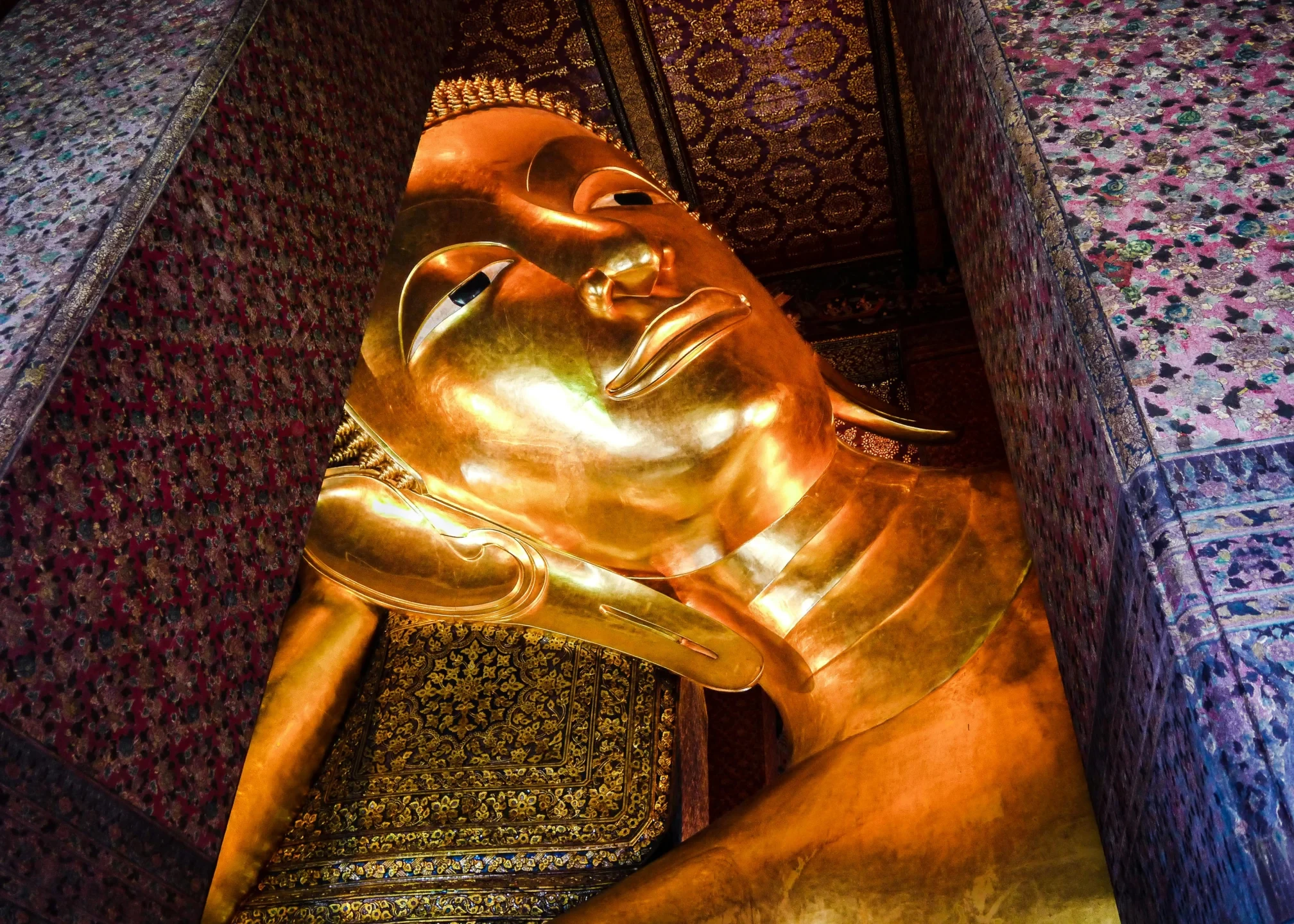
For visitors exploring Bangkok, Wat Pho is much more than a place to see a large Buddha image. The temple complex is a remarkable collection of religious art, history, traditional knowledge and Thai cultural heritage.
It is also closely associated with Nuad Thai, traditional Thai massage, which UNESCO inscribed on the Representative List of the Intangible Cultural Heritage of Humanity in 2019.
If you are planning a Bangkok sightseeing itinerary, Wat Pho can easily be combined with the Grand Palace, Wat Arun and a Chao Phraya River trip, making it one of the best cultural stops in Bangkok.
What Is Wat Pho?
Wat Pho is the commonly used name for Wat Phra Chetuphon Wimon Mangkhalaram, one of Bangkok's most famous Buddhist temples.
The temple is located on Sanam Chai Road and Maharaj Road, immediately next to the Grand Palace. The official temple address is 2 Sanam Chai Road, Grand Palace Subdistrict, Phra Nakhon District, Bangkok 10200.
The temple is sometimes called the Temple of the Reclining Buddha because of its enormous reclining Buddha image.
However, the reclining Buddha is only one part of a much larger temple complex.
Visitors can explore:
The Reclining Buddha
Buddhist chapels and halls
Chedis
Murals
Stone inscriptions
Decorative gates and statues
Traditional Thai architectural details
Historical medical knowledge
Traditional Thai massage facilities
Why Is Wat Pho Famous?
Wat Pho is particularly famous for four things:
1. The Reclining Buddha
The enormous golden Buddha is the temple's most recognizable attraction.
2. Traditional Thai architecture
The temple contains an impressive collection of chedis, statues, murals and decorative structures.
3. Thai massage
Wat Pho has a historic association with traditional Thai medicine and massage.
4. Historic knowledge
Its extensive collection of stone inscriptions preserves knowledge covering religion, medicine, literature and other subjects.
UNESCO's Memory of the World programme recognizes the Epigraphic Archives of Wat Pho, a collection of 1,431 stone inscriptions created between 1831 and 1841.
The Reclining Buddha at Wat Pho
The Reclining Buddha is undoubtedly the highlight for most first-time visitors.
The enormous image depicts the Buddha lying on his side in a peaceful reclining position.
The Buddha's body is covered in gold leaf, while the feet feature an elaborate design that attracts enormous attention from visitors and photographers.
UNESCO described the image in 2026 as a 46-metre-long golden reclining Buddha.
Because the Buddha is located inside a relatively enclosed building, it can be difficult to appreciate the full scale of the image from a single position.
Take your time walking around the hall and look carefully at the details.
The Feet of the Reclining Buddha
One of the most fascinating details is the enormous soles of the Buddha's feet.
The feet feature intricate decorative designs associated with Buddhist symbolism.
Visitors often spend considerable time photographing this part of the statue because the detailed artwork is very different from the golden body of the Buddha.
The combination of the enormous scale and intricate decoration makes the reclining Buddha one of Bangkok's most memorable cultural sights.
The Architecture of Wat Pho
Wat Pho is not simply one building.
It is a large temple complex containing numerous structures.
As you walk around the grounds, you will see:
Chedis
Viharas
Ubosot
Chinese statues
Decorative walls
Buddhist images
Mural paintings
Ornamental tiles
Stone inscriptions
The combination of Thai, Buddhist and Chinese decorative influences gives Wat Pho a distinctive appearance.
The Chedis of Wat Pho
One of the most recognizable features of Wat Pho is its collection of large decorative chedis.
Many are covered with colourful ceramic tiles and decorated with intricate patterns.
The chedis create one of the most photogenic areas of the temple.
Look closely at the tile work and architectural details rather than simply walking past them.
Wat Pho and Thai Massage
Wat Pho has a particularly important place in the history of traditional Thai massage.
The temple complex contains the Wat Pho Thai Traditional Medical School, where traditional Thai massage services are offered.
The official Wat Pho website currently lists massage services including:
30-minute Thai massage
60-minute Thai massage
120-minute Thai massage
Foot massage
Thai massage with herbal balm
Thai massage with plai oil
This connection between the temple and traditional medicine is one of the things that makes Wat Pho different from many other Bangkok temples.
UNESCO and Wat Pho's Traditional Knowledge
Wat Pho's importance extends beyond architecture and religion.
UNESCO's Memory of the World Register includes the Epigraphic Archives of Wat Pho.
The collection consists of 1,431 inscriptions created during the reign of King Rama III and covers a wide variety of subjects, including religious and secular knowledge.
The inscriptions were intended to make knowledge accessible to the public.
This makes Wat Pho particularly interesting for visitors who want to understand Thailand's intellectual and cultural history rather than simply photograph a temple.
Wat Pho and Thai Traditional Medicine
Some of Wat Pho's inscriptions relate to traditional medicine and massage.
UNESCO notes that the inscriptions include medical and massage knowledge and that Wat Pho played an important role in preserving and transmitting this traditional knowledge.
This is one reason Wat Pho is often associated internationally with Thai massage.
However, it is important to distinguish the temple's historical role in preserving traditional knowledge from modern medical treatment.
Wat Pho and Nuad Thai
Nuad Thai, or traditional Thai massage, was inscribed by UNESCO in 2019 on the Representative List of the Intangible Cultural Heritage of Humanity.
UNESCO describes Nuad Thai as part of the art, science and culture of traditional Thai healthcare.
The tradition involves manual techniques intended to work with the body's physical structure and traditional concepts of energy pathways known as sen.
For travellers, Wat Pho provides an opportunity to see how traditional Thai medicine and cultural heritage became connected to an important Buddhist institution.
The Historical Importance of Wat Pho
Wat Pho has a long history predating modern Bangkok.
The temple was significantly renovated and expanded during the early Bangkok period, particularly under the Chakri kings.
The extensive inscriptions and educational programme associated with the temple became particularly important during the reign of King Rama III.
The goal was not simply to beautify the temple.
Knowledge was intentionally recorded and displayed so that it could be preserved and shared.
That makes Wat Pho unusual among tourist attractions because the temple functions simultaneously as:
religious site + historical monument + educational centre + cultural archive.
Wat Pho as an Educational Centre
Historically, Wat Pho became an important centre for learning.
The inscriptions covered subjects such as:
Buddhism
Literature
Medicine
Traditional massage
Astrology
History
Ethics
Everyday knowledge
UNESCO describes the inscription collection as representing a broad range of Thai knowledge with Asian and local roots.
This educational heritage is an important part of understanding why Wat Pho remains culturally significant today.
Wat Pho's Murals
The temple contains numerous murals depicting Buddhist stories and traditional Thai scenes.
Some are found inside important religious buildings.
The murals provide an opportunity to see traditional Thai artistic techniques and storytelling.
When visiting, look beyond the large Buddha images and pay attention to:
Wall paintings
Ceiling decorations
Door panels
Window frames
Decorative patterns
These smaller details often provide some of the best photographs.
Wat Pho's Chinese Influence
Visitors may notice numerous Chinese-style stone figures and decorative elements throughout the temple grounds.
These reflect historical cultural and commercial connections between Thailand and China.
The combination of Thai Buddhist architecture with Chinese decorative features gives Wat Pho a distinctive visual character.
Where Is Wat Pho?
Wat Pho is located in Bangkok's historic Phra Nakhon district, directly beside the Grand Palace.
Address:
2 Sanam Chai Road
Grand Palace Subdistrict
Phra Nakhon District
Bangkok 10200
Thailand
Its location makes it easy to combine with several other major Bangkok attractions.
How to Get to Wat Pho
By MRT
One of the easiest modern ways to reach Wat Pho is via the Bangkok MRT system.
Travel to Sanam Chai MRT Station and continue toward the temple.
This is particularly convenient for tourists staying elsewhere in central Bangkok.
By Boat
Another enjoyable option is travelling by boat along the Chao Phraya River.
Tha Tien Pier is located close to Wat Pho.
A river journey can be combined with visits to Wat Arun and other riverside attractions.
By Taxi or Ride-Hailing Service
Taxis and ride-hailing services can also take you to the area.
However, Bangkok traffic can be heavy, particularly during busy periods.
For many tourists, MRT or river transport can be more predictable.
Wat Pho Opening Hours
The official Wat Pho visitor information currently states that the temple is open daily from:
8:00 AM – 7:30 PM
The official site currently lists the foreign visitor admission fee as:
THB 300 per person
Children under 120 cm can enter free according to the temple's visitor information.
Because opening arrangements and ticket policies can change, visitors should check the official Wat Pho website before travelling.
Wat Pho Dress Code
Remember that Wat Pho is an active religious site, not simply a tourist attraction.
Visitors should dress respectfully.
The official temple guidance asks visitors to wear appropriate clothing and states that shorts above the knee are prohibited for women.
A safe choice is:
Trousers
Long skirts
Shirts covering the shoulders
Comfortable but respectful clothing
Avoid arriving in beachwear.
Temple Etiquette at Wat Pho
There are several simple rules tourists should follow.
Remove your shoes
Shoes must be removed before entering designated religious buildings.
Keep your voice low
Remember that the temple is an active religious environment.
Do not climb on statues
Buddha images and temple structures should be treated respectfully.
Follow photography instructions
Photography may be permitted in many areas, but visitors should follow posted restrictions.
Respect monks
Visitors should behave politely around monks and religious ceremonies.
The official Wat Pho visitor guidance specifically asks visitors to remain calm and polite within the temple grounds.
Can You Take Photos at Wat Pho?
Yes, photography is permitted in many areas, and Wat Pho is one of Bangkok's most photogenic temples.
However, visitors should remember that it is a functioning religious site.
Avoid:
Blocking worshippers
Touching religious objects
Climbing structures
Using inappropriate poses around Buddha images
Ignoring photography restrictions
Be particularly respectful when photographing people praying or participating in ceremonies.
Best Time to Visit Wat Pho
For a more comfortable experience, consider visiting early in the morning.
Advantages include:
Cooler temperatures
Better conditions for walking
Potentially fewer visitors
Softer morning light for photography
Another good option is later in the afternoon.
However, if Wat Pho is part of a larger sightseeing itinerary, plan your route carefully so you have enough time to explore the temple rather than rushing through it.
How Long Should You Spend at Wat Pho?
For a quick visit: 1 hour
For a comfortable visit: 1.5–2 hours
For visitors interested in architecture, history, photography and traditional medicine: 2–3 hours
If you also plan to have a traditional Thai massage, allow additional time.
Best Things to See at Wat Pho
If you have limited time, prioritize these:
1. Reclining Buddha
The main attraction.
2. Buddha's feet
Take time to appreciate the detailed artwork.
3. Chedis
The colourful tiled structures are excellent for photography.
4. Murals
Look inside the temple buildings for traditional artwork.
5. Stone inscriptions
These demonstrate Wat Pho's role as a centre of knowledge.
6. Traditional Thai massage
Consider experiencing the temple's connection with Thai massage.
7. Temple architecture
Walk around rather than going directly to the Reclining Buddha and leaving.
Wat Pho, Grand Palace and Wat Arun: The Perfect Bangkok Temple Route
One of the best ways to explore Bangkok's historic centre is to visit three major attractions together.
Stop 1 — Wat Pho
Start with the Reclining Buddha and temple complex.
Stop 2 — Grand Palace
Walk from Wat Pho to the Grand Palace area.
Stop 3 — Wat Arun
Take a boat across the Chao Phraya River to Wat Arun.
This creates an excellent full-day cultural itinerary.
Wat Pho vs Wat Arun
Both temples are famous, but they offer very different experiences.
Wat Pho
Best known for:
Reclining Buddha
Traditional Thai massage
Historic inscriptions
Chedis
Traditional temple architecture
Wat Arun
Best known for:
Riverside location
Tall central prang
Chao Phraya River views
Dramatic exterior architecture
If you have time, visit both.
Wat Pho vs Grand Palace
The Grand Palace and Wat Pho are located next to each other, making them easy to combine.
The Grand Palace is associated with Thailand's royal history and contains important royal and religious structures.
Wat Pho provides a different perspective, emphasizing Buddhist culture, traditional knowledge, architecture and the famous Reclining Buddha.
Visiting both gives tourists a much broader understanding of Bangkok's historic centre.
Is Wat Pho Worth Visiting?
Absolutely.
Wat Pho is one of the places in Bangkok where several aspects of Thai culture come together:
Buddhism + architecture + history + traditional medicine + Thai massage + education.
The Reclining Buddha alone makes the temple worth visiting, but the wider complex provides much more to discover.
For first-time visitors to Bangkok, Wat Pho should be high on the sightseeing list.
Tips for First-Time Visitors
Arrive early
Bangkok can become hot and crowded later in the day.
Wear comfortable shoes
The complex requires considerable walking.
Dress appropriately
You are visiting an active Buddhist temple.
Carry water
Bangkok's heat can be intense.
Bring a camera
The temple architecture provides many excellent photography opportunities.
Allow enough time
Don't rush directly to the Reclining Buddha and leave.
Combine attractions
Wat Pho is ideally positioned for a Grand Palace and Wat Arun itinerary.
Interesting Facts About Wat Pho
Wat Pho is officially called Wat Phra Chetuphon Wimon Mangkhalaram.
It is located beside Bangkok's Grand Palace.
The Reclining Buddha is approximately 46 metres long.
The temple's historic archives contain 1,431 stone inscriptions.
The inscriptions were produced during 1831–1841.
The Epigraphic Archives of Wat Pho were added to UNESCO's Memory of the World Register in 2011.
Wat Pho is strongly associated with traditional Thai massage.
Nuad Thai was inscribed on UNESCO's Intangible Cultural Heritage list in 2019.
The temple is currently open daily according to its official visitor information.
Final Thoughts
Wat Pho is much more than a Bangkok tourist attraction.
It is a place where Thailand's Buddhist traditions, architecture, history, education and traditional medicine come together.
The enormous Reclining Buddha is the obvious highlight, but visitors who take time to explore the rest of the complex will discover colourful chedis, intricate architecture, murals, inscriptions and centuries of cultural knowledge.
Its connection to traditional Thai massage adds another dimension to the experience, while the UNESCO-recognized inscriptions demonstrate the temple's historical role in preserving and sharing knowledge.
For anyone visiting Bangkok, particularly for the first time, a visit to Wat Pho, the Grand Palace and Wat Arun is one of the best ways to experience the historical and cultural heart of Thailand.